Q. Why look at the neck vertebrae rather than the jaw alone?
The jaw joint moves around the upper neck vertebrae (the first and second cervical vertebrae) as its central axis. If that axis is out of place, adjusting the jaw alone does not hold.
📝 Detailed Answer
The jaw joint is one of the most mobile joints in the body, and it moves using the upper neck vertebrae as its central axis. When that axis is out of place, it does not support the occipital bone properly, and the balance of the skull is affected too.
So at Jinju Dangdang Korean Medicine Clinic we check the balance of the skull, neck vertebrae, spine and pelvis alongside the jaw joint. Adjusting only the jaw while the axis stays as it was means it returns to the same place.
Treatment depends on what we find.
- Chuna manual therapy — aligns the upper neck vertebrae and the skull. Because the jaw joint moves around the second cervical vertebra as its axis, adjusting the jaw alone does not hold
- Jaw joint acupuncture — placed at points effective for the jaw joint to reduce pain and the odd feeling
- Pharmacopuncture and bee venom pharmacopuncture — used on the surrounding ligaments when the sounds are long-standing or the pain is slow to settle
- Craniosacral therapy — releases compression between the occipital bone and the neck vertebrae, relaxing tension in the muscles throughout the body alongside
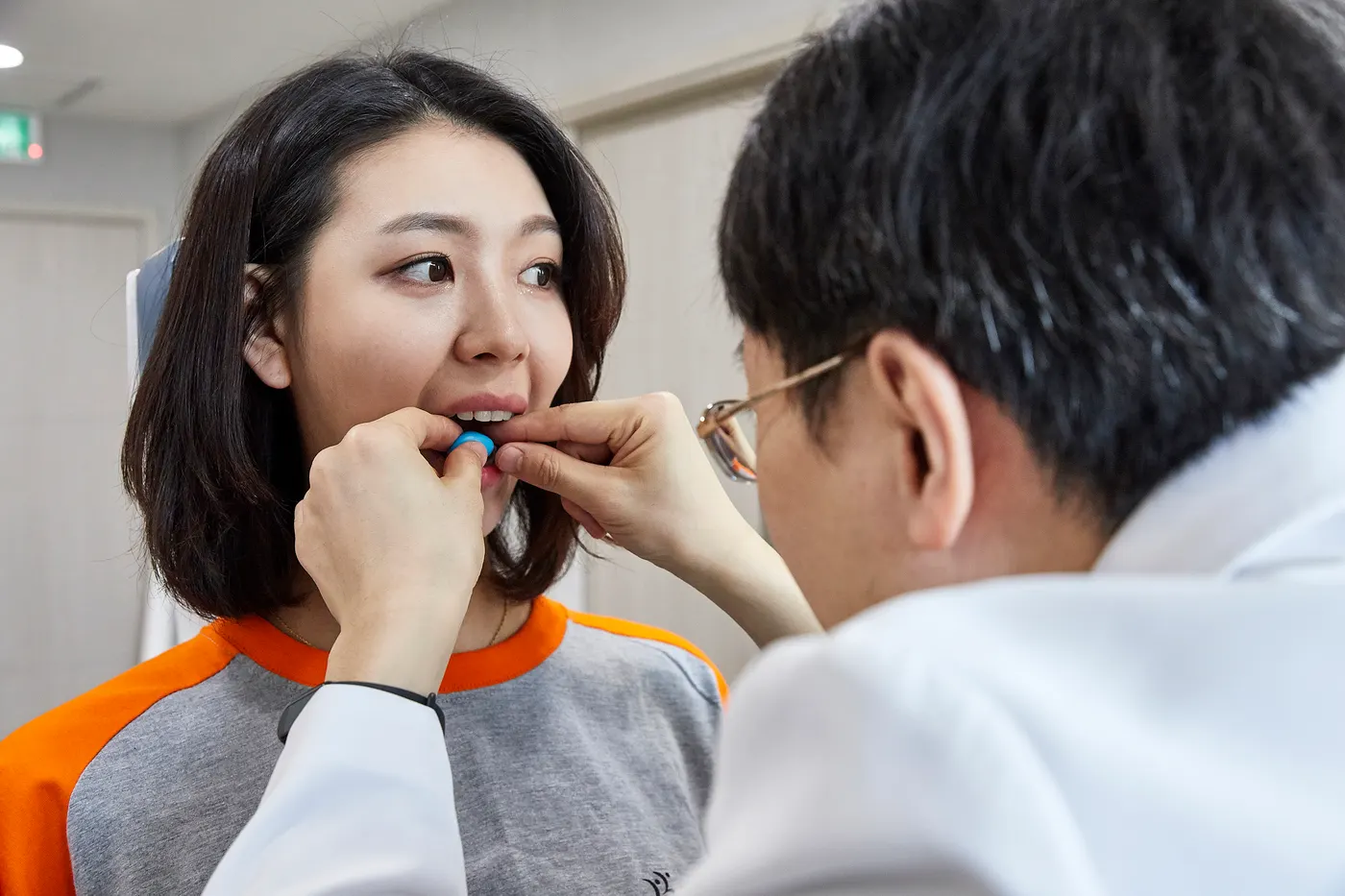
- Jaw joint corrective appliance — an intra-oral appliance that helps keep the jaw in a comfortable position during sleep and through the day. There is a standard type and a custom type that matches a difference in height between left and right
- Cupping — used when the spinal erector muscles are excessively tense
- Herbal medicine — used alongside where needed
Where recovery of the ligaments or muscles around the jaw joint needs support, we sometimes use a soft tissue repair laser. It is not a treatment we use often, only when we judge it necessary.

Expert Verified
Injun Eo
Director