💥
Injury
A fall or a traffic accident delivers an impact the body cannot absorb. Strong muscles and ligaments absorb a good part of it.
Spine · Joint · Pain · Posture Correction · Traffic Accident Care
At Dangdang we add structural realignment to the Korean medicine treatments that address functional imbalance. We look not only at the symptom but at what produced the pain.
A classification our director set out in his newspaper column
A fall or a traffic accident delivers an impact the body cannot absorb. Strong muscles and ligaments absorb a good part of it.
Muscles move the body, and they also stop it. When they weaken and the brake fails, the joint travels past its normal range and takes the impact.
When muscles cannot work in their best direction, the same task costs more. Fatigue builds and the injury looks like overuse.
Myofascial release loosens tightened tissue, Chuna manual therapy realigns the spine and joints, and exercise therapy helps hold that alignment. Those three together are our Integrated Corrective Treatment. The Dangdang network published a study in the Journal of Korean Medicine Integrated Medicine in which 279 patients with postural imbalance received this treatment twice a week for 12 weeks.
When the jaw loses balance the neck vertebrae shift, and as the body compensates the spine curves, carrying the change down to the pelvis and legs.
When the structure of the foot gives way, gait changes and the knee and pelvis deform. That effect travels upward to the spine and shoulder.
Treating only the painful area makes recurrence hard to prevent. We look for the hidden cause in the areas connected to it.
Dangdang Pain Navigation Assessment
A. Our director puts it this way: "Treatments that are entirely comfortable to receive are clearly not enough." Rebuilding muscle takes effort from you as well. What helps is recording where you are now, so you can see what changed and by how much as you go.
A. Degenerative change that comes with age cannot be reversed. Even so, pain in later years often has more to do with posture and lack of strength than with age itself. Many people stay highly active into old age.
A. When the structure of the foot gives way, gait changes and the effect travels up to the knee, pelvis and spine. We call this the ascending pattern. Where it hurts and where the cause sits can be different places.
A. We treat them with Chuna manual therapy, herbal medicine, acupuncture, pharmacopuncture and Korean medicine physical therapy, and auto insurance billing is available.
Get consultations and prescriptions without visiting.
Try our easy consultation service.
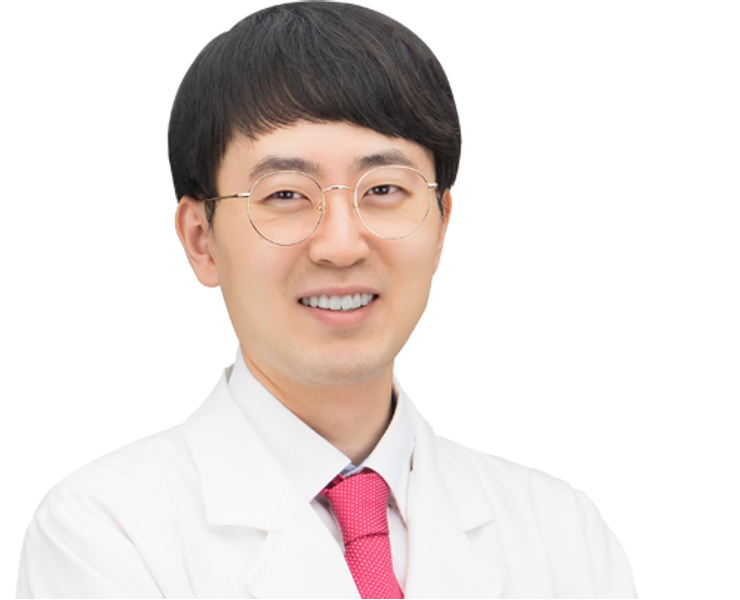
Medical reviewer
어인준 대표원장
Page summary
척추·관절·통증 / 체형교정. 당당 네트워크는 체형 불균형이 있는 환자 279명을 대상으로 이 치료를 주 2회씩 12주간 시행한 연구를 대한통합의학회지에 발표했습니다."}, {"type":…. 증상만이 아니라 통증을 만든 원인을 함께 봅니다. 아픈 곳과 원인이 있는 곳이 다를 수 있습니다."}, {"q": "교통사고 후유증도 보나요?", "a": "추나요법과 한약, 침, 약침, 한방물리치료로 진료하며 자동차보험 진료가 가능합니다."}]}] ["허리 통증", "목 통증", "어깨 통증", "무릎 통증", "척추측만증", "일자목·거북목", "골반 불균형", "족부 질환", "교통사고 후유증"].
What this page covers
Key points